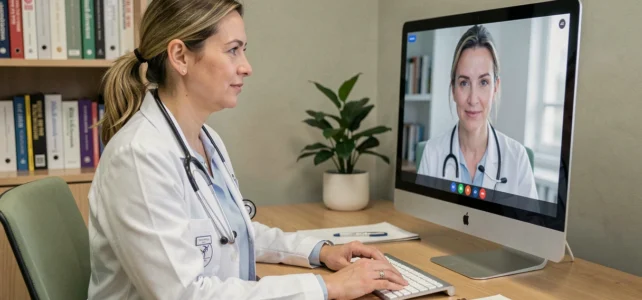
A general practitioner who follows their chronic patients remotely and a platform that employs practitioners for occasional consultations do not use the same type of tool, and especially not the same regulatory framework. This distinction, rarely highlighted in comparisons, nonetheless conditions the choice of medical teleconsultation software in 2024.
Mandatory accreditation and office software: two regulatory statuses not to be confused
Do you use your own office software to consult your patients remotely? You are not subject to the accreditation regime for teleconsultation companies. On the other hand, a platform that employs or connects salaried doctors must obtain a specific accreditation, reinforced by decree no. 2026-626 of July 8, 2026.
This decree tightens the conditions for renewing the accreditation and imposes an evaluation according to the HAS reference framework. An independent office software is not subject to this accreditation, whereas software associated with a teleconsultation company is.
An independent professional who opts for an accredited platform delegates part of the organizational responsibility to that company. In contrast, using a teleconsultation module integrated into their office management software (Doctolib, Maiia, Weda) keeps the practitioner in control of their patient journey, from appointment scheduling to billing.
To identify the best medical teleconsultation software, it is essential to first clarify the framework in which remote consultations are conducted.

HDS hosting and patient data security: the non-negotiable criterion
Before comparing video features or the quality of the agenda, a technical point settles the debate. All teleconsultation software must host health data with a certified HDS host. Without this certification, the storage of patient data is illegal.
In practical terms, this means that video streams, consultation reports, and documents shared during the session are transmitted through compliant servers. Well-known solutions like Doctolib, Maiia, or Medaviz display this compliance. For less common tools, checking the HDS certification of the host is the first reflex to have.
Secure messaging and MSSanté
Compatibility with MSSanté messaging is another marker of maturity. It allows for the exchange of medical documents between healthcare professionals in a secure framework. Software that natively integrates MSSanté avoids sending via traditional email, a frequent source of breaches.
Work stoppages in teleconsultation: a constraint that weighs on software choice
Since January 1, 2024, a work stoppage prescribed or renewed in teleconsultation cannot exceed three days, unless the patient consults their treating physician. This limitation changes the game for practitioners managing an active patient base.
Only the treating physician can prescribe a longer stoppage in teleconsultation. For all others, the three-day limit applies. Well-designed software integrates this rule directly into the prescription module, preventing billing errors and rejections by Health Insurance.
Check that your solution displays an alert or automatically blocks prescriptions beyond three days when the patient is not identified as the treating physician’s patient. Few publishers highlight this feature, but it saves considerable time in administrative management.
Teleconsultation features: what really differentiates solutions
Beyond regulatory compliance, the differences between software lie in very concrete daily details. Here are the features that separate a decent tool from one truly suited to practice:
- Quality and stability of the video stream: a choppy or pixelated consultation renders visual examination useless. Dedicated solutions (Qare, Livi, Hellocare) invest more in this aspect than video modules grafted onto office management software
- Integration of SESAM-Vitale billing: being able to teletransmit the care sheet directly from the video consultation, without re-entry, reduces administrative time per act
- Access to the patient file during the consultation: displaying medical history, past prescriptions, and test results on the same screen as the video stream, without switching between two software
- Integrated appointment scheduling for patients: Doctolib and Maiia have a structural advantage due to their existing patient base, which enhances the practitioner’s visibility
All-in-one software or complementary module
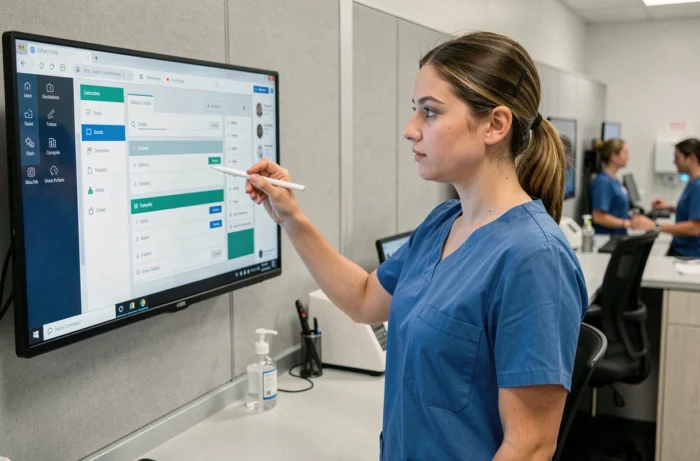
Two approaches coexist. Some publishers offer teleconsultation as an integrated brick in their office management software (Doctolib, Weda, Maiia). Others are specialized platforms (Qare, Livi, Medaviz) that may connect to existing software.
A practitioner already equipped with office software should check if the integrated teleconsultation module is sufficient. Adding an external platform creates double entry and complicates patient file tracking. In contrast, a professional practicing exclusively remotely will find optimized ergonomics for this mode of consultation in specialized platforms.
Real cost of teleconsultation software for a healthcare professional
Pricing models vary according to the category of tool. Office management software generally charges a monthly subscription that includes teleconsultation among other features. Specialized platforms sometimes take a commission per act or offer a dedicated package.
The visible cost (monthly subscription) does not always reflect the real cost. Include the time for double entry, training, and data migration in your calculation. Cheaper software that is poorly integrated into the rest of your digital environment costs more in lost hours than in billed euros.
The criteria to weigh remain the same regardless of budget: HDS compliance, Ségur compatibility, video quality, and integration into the patient file. A compliant and smooth tool in daily use better protects practice than a cheap solution that multiplies administrative friction.