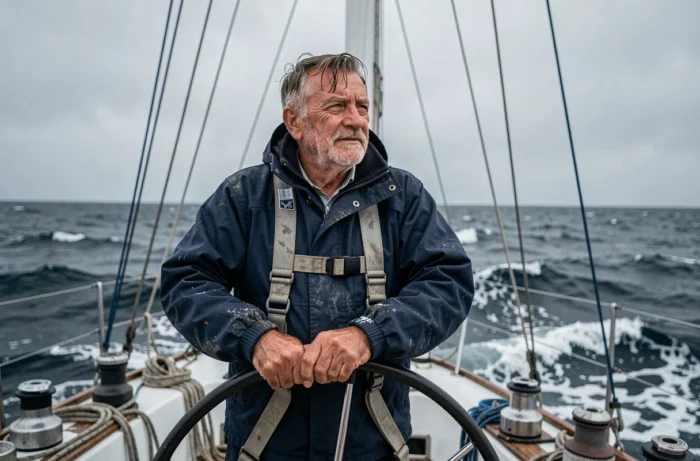
Five Vendée Globe races completed, nine circumnavigations, three victories in the Solitaire du Figaro, and a second place in the 2006 Route du Rhum: Jean Le Cam’s record is hard to summarize quickly. Born in Quimper and based in Port-la-Forêt, this Breton sailor has been racking up miles since the late 1980s. What sets his career apart is the physical relationship with the boat, from the restoration of the hull to the finish line.
A skipper who restores his own boats: what this changes in offshore racing
Contemporary offshore racing relies on structured teams. A skipper pilots, a design office designs, a shipyard builds, and a technical team prepares. Jean Le Cam operates differently. For the 2026 Route du Rhum, he is entering Alegria-Gustave Roussy, a 1986 Swan 59, in the Vintage category.
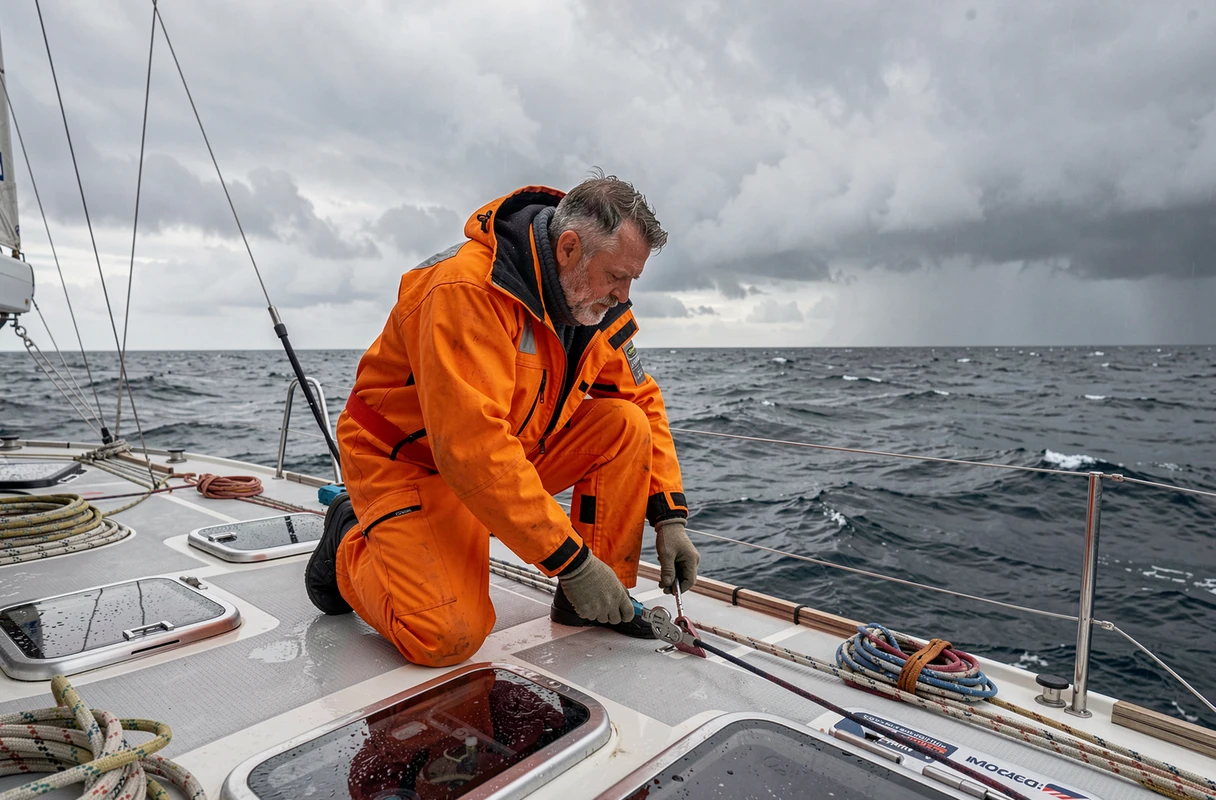
This choice is not trivial. The Swan 59 has been restored under his direction, which involves structural decisions about the hull, rigging, and interior layout. While other skippers receive a turnkey boat, Le Cam oversees every step of the refurbishment.
This versatility, rare in the current professional circuit, provides a concrete advantage: an intimate knowledge of the boat’s behavior at sea. A skipper who has personally reinforced the hull knows exactly what stresses the structure can withstand in rough weather. On the other hand, it requires a significant investment of time upfront, which is incompatible with the pace of sponsorship and communication that modern teams demand.
Vendée Globe: why five participations set Jean Le Cam apart
The Vendée Globe is an elimination race. In each edition, a significant proportion of competitors abandon. Completing the race once is a logistical and physical feat. Completing it five times over several decades requires an adaptability that few sailors demonstrate.
Le Cam has navigated through generations of boats. Monohulls have changed in shape, materials, and autopilot systems. Staying competitive over such a long timeframe means absorbing these technical mutations without having the budget of the leaders in the rankings.
The rescue of Kevin Escoffier in 2020
During the 2020-2021 edition, Le Cam rescued Kevin Escoffier in the open ocean after his boat sank. This rescue, praised by the entire maritime community, illustrates an aspect of the Vendée Globe that the final ranking does not capture: the solidarity among competitors remains a moral and regulatory obligation, and it can change the course of a race in a matter of hours.
Le Cam lost places in the rankings by diverting to provide assistance. This type of decision engages all the physical and logistical preparation invested over months. The fact that he still finished the race confirms his ability to absorb the unexpected without letting fatigue or frustration take over.
Solitaire du Figaro and Route du Rhum: a record beyond circumnavigation
Reducing Le Cam’s career to the Vendée Globe overlooks part of the picture. His three victories in the Solitaire du Figaro are an indicator of consistency across very different race formats: short stages, coastal and offshore navigation, and dense competition in one-design boats.
- The Solitaire du Figaro tests weather reading and short-term tactics, while the Vendée Globe rewards endurance and management of material wear over several weeks.
- The 2006 Route du Rhum, where Le Cam finished second, involves a solo crossing of the Atlantic with highly variable wind conditions depending on the year.
- Nine circumnavigations in total, across all races, place Le Cam among the French sailors who have accumulated the most miles in ocean competition.
This diversity of formats prevents him from being categorized as a specialist in a single type of event. His record covers technical coastal navigation, transatlantic racing, and circumnavigation, which remains exceptional in a field where specialization has become the norm.
Finistère Mer Vent and Jean Le Cam’s Breton roots
The Finistère Mer Vent project, based in Port-la-Forêt, goes beyond the simple training base. Port-la-Forêt is home to several professional skippers, shipyards, and infrastructure dedicated to offshore racing. Le Cam embodies a craftsman model in an ecosystem that is professionalizing.
This local presence has concrete consequences. Subcontractors, sailmakers, and mechanics are nearby. Sea trials take place under real Atlantic conditions. The sailor maintains direct control over the preparation, while others must deal with service providers spread across multiple sites.
Vintage category and Route du Rhum 2026
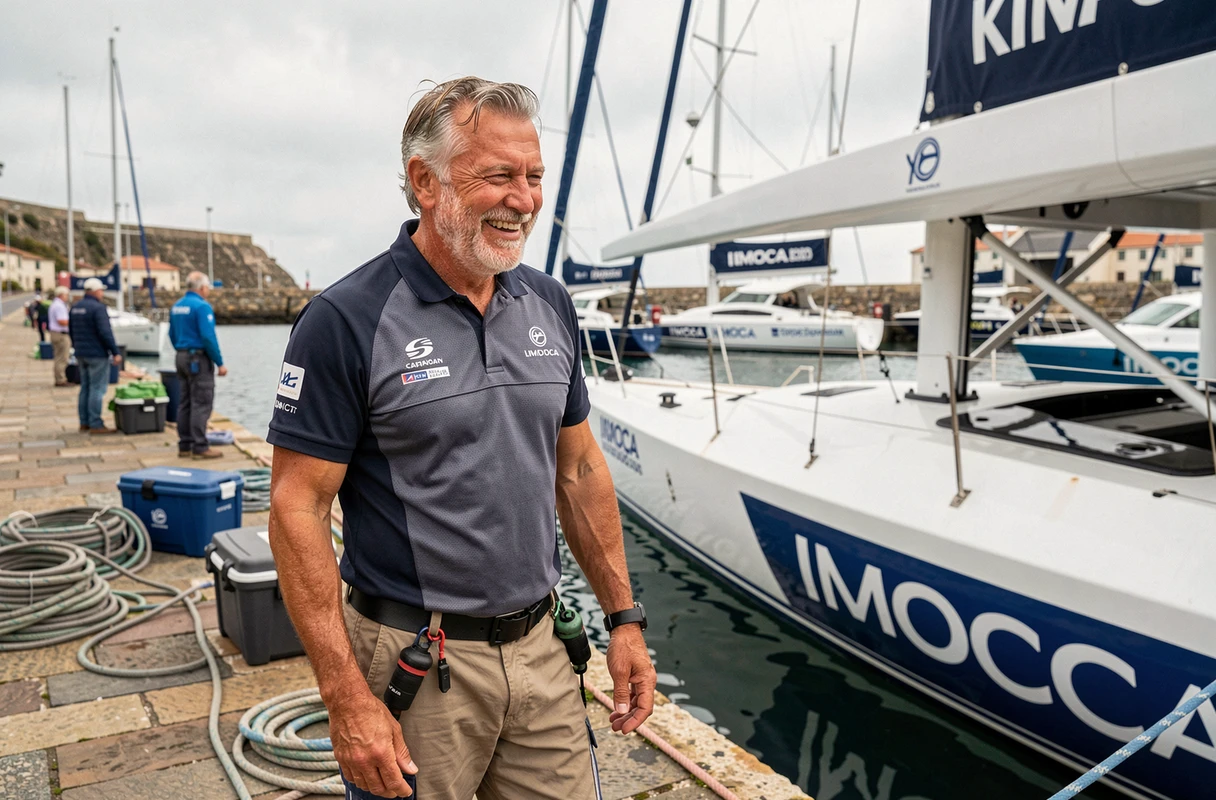
The choice to compete in the Vintage category with a 1986 Swan 59 for the 2026 Route du Rhum extends this logic. Sailing on a nearly forty-year-old boat in transatlantic competition is not a nostalgic gesture. It is a technical bet that requires rigorous restoration and a fine understanding of the structural limits of an old hull.
The boat carries the colors of Gustave Roussy, linking the race to a charitable commitment. This setup, more modest than the budgets of the Ultim or Imoca categories, reflects a mode of operation where the skipper remains the pivot of the entire chain, from financing to steering.
- Alegria-Gustave Roussy is a Swan 59 built in 1986, restored under Le Cam’s direct supervision.
- The Vintage category of the Route du Rhum welcomes period boats, imposing specific preparation constraints.
- The partnership with Gustave Roussy places this participation within a solidarity approach, apart from industrial sponsorship logics.
Jean Le Cam’s journey outlines a figure of a sailor that is becoming increasingly rare in the professional circuit. The ability to design, restore, and engage one’s own boat while remaining competitive in the largest ocean races relies on a technical know-how that the increasing structuring of teams tends to fragment. Whether this craftsman model survives the upcoming editions of the Vendée Globe or the Route du Rhum remains an open question.