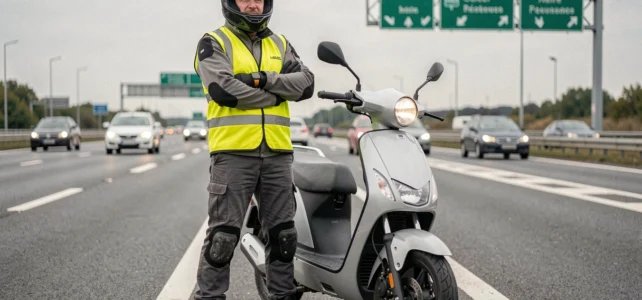
Riding a 125 scooter on the highway is legal, but the reality on the ground is radically different from an urban journey. The side wind from a truck passing by, the speed of vehicles around you, the lack of refuge in case of a mechanical problem: all of this requires a preparation that many riders underestimate. Here are the concrete points to master before entering a fast lane.
Technical inspection of the 125 scooter: a prerequisite before the highway
Since April 15, 2024, all motorized two-wheelers over 50 cm³ are subject to periodic technical inspections. 125 cm³ scooters are no exception, with a gradual introduction based on the date of first registration: vehicles registered before 2017 had to undergo their first inspection in 2024, those from 2017 to 2019 in 2025, and those from 2020 to 2021 in 2026.
We often think about tires and brakes, but the noise level at the exhaust has been controlled since 2025. A non-compliant or modified exhaust can lead to a refusal. For a scooter that regularly uses the highway, this inspection acts as a safety net: it checks the lighting, braking, and tire condition, all elements that are stressed much more intensely at high speeds than in the city.
Failure to have a valid technical inspection exposes you to a fixed fine of 135 euros, which can rise to 750 euros in court. As detailed in the practical guide from La Belle Auto, the administrative compliance of the scooter is an integral part of the preparation before a highway journey.
Mandatory equipment for the rider on the highway on a scooter
The regulations do not distinguish between highways and departmental roads: the same equipment is required. However, on the highway, their quality and condition become crucial because the consequences of a fall at high speed are vastly different from an urban accident.
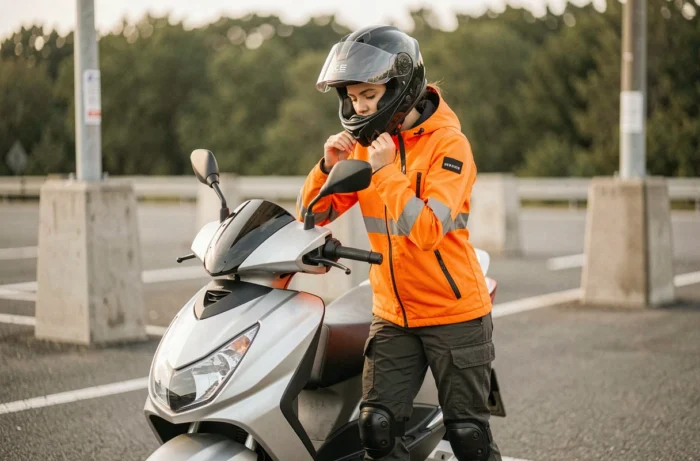
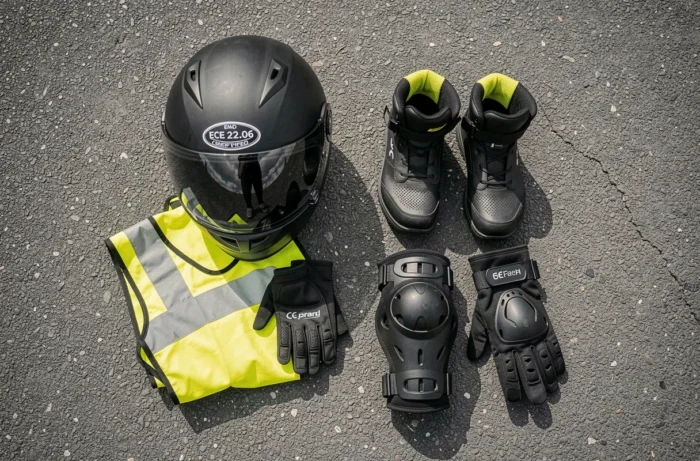
Here is the list of mandatory equipment for the rider and passenger:
- ECE-approved helmet: a full-face helmet offers the best protection on the highway. Jet helmets leave the chin exposed, which poses a significant risk above 80 km/h.
- CE-certified gloves: mandatory for both the rider and the passenger. Non-approved city gloves expose you to a fine and, above all, serious hand injuries in case of a slide.
- High-visibility vest: to be worn in case of emergency stop or breakdown on the emergency lane. It must be immediately accessible, not buried in the trunk under the seat.
Beyond legal obligations, a jacket with back and elbow protections, reinforced pants, and high boots are not mandated by law but drastically change the prognosis in case of a fall. A textile or leather jacket with certified protections drastically reduces abrasions at high speeds.
Passenger: the same requirements, often overlooked
The passenger must wear an approved helmet and certified gloves just like the rider. It is often observed that passengers are equipped with non-approved gloves or open shoes. On the highway, this laxity exposes them to penalties, but more importantly, to a real danger: the passenger footrests, grab handles, and seating position must also be checked before departure.
125 scooter on the highway: speed and driving constraints
Article R421-2 of the Highway Code prohibits access to highways for mopeds of 50 cm³ or less. 125 cm³ scooters are allowed provided they can reach 80 km/h, the minimum speed threshold on the highway. Below this, the vehicle creates a danger for other users.
In practice, a 125 cm³ typically travels between 100 and 110 km/h at cruising speed. The issue is not the top speed but the ability to accelerate: overtaking a truck or merging from an on-ramp requires brisk accelerations that some 125 models struggle to provide. Feedback on this point varies by engine type, but it is recommended to test your scooter’s acceleration in real conditions before committing to a busy highway section.
Positioning on the roadway and safety distances
On the highway, you ride in the right lane or the central lane. The left lane is reserved for overtaking. On a 125 scooter, staying in the right lane is often the safest choice, except when overtaking a heavy vehicle.
Safety distances must be increased compared to urban driving. At 110 km/h, the braking distance of a scooter is much greater than that of a car. Two seconds of gap with the vehicle in front is an absolute minimum. In rainy weather, this distance should be further extended.
Breakdown on the highway on a scooter: the procedure to follow
A scooter breakdown on the highway is a high-risk situation. The emergency lane is not designed for long-term parking, and a scooter is very hard to see there.
- Pull over as far to the right as possible, activate the hazard lights if the model has them, and immediately put on the high-visibility vest.
- Never stay next to the scooter on the roadway side. Position yourself behind the guardrail and call for help via an emergency phone or your mobile.
- If the scooter cannot reach the emergency lane, exit the vehicle to the right and move as far away from the traffic lane as possible.
Having motorcycle insurance that covers breakdowns on the highway is highly recommended. Many basic insurance contracts exclude highway towing for two-wheelers, which leaves the rider in a tricky and costly situation.
Preparing for a highway journey on a 125 scooter goes beyond just checking the fuel level. Up-to-date technical inspection, complete protective gear, and appropriate insurance form a triptych that conditions both the legality of the journey and the safety of the rider. Checking these three points before each long departure remains the most effective reflex.