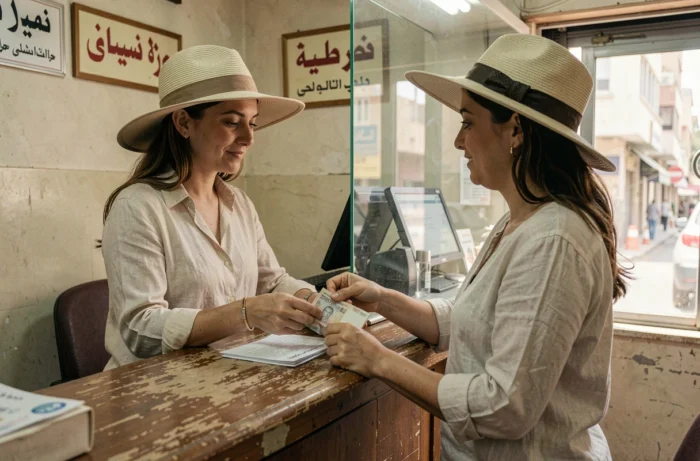
The Egyptian pound (EGP) is the only official currency in Egypt, but euros and dollars are widely accepted in the tourist circuit. With the fluctuating exchange rate, customs limits, and the gradual arrival of contactless payment, the payment options on-site deserve careful consideration before departure.
Customs Limits and Currency Regulations in Egypt
Before even choosing a payment method, a regulatory constraint shapes the strategy: the amounts you can carry when entering and exiting the territory. The table below summarizes the applicable thresholds.
| Currency Type | Import | Export |
|---|---|---|
| Egyptian Pound (EGP) | Maximum 5,000 EGP | Maximum 5,000 EGP |
| Foreign Currency (USD, EUR, etc.) | Free, mandatory declaration beyond 10,000 USD or equivalent | Up to 10,000 USD or equivalent (beyond that, only if declared upon entry) |
The export limit of 5,000 EGP makes it unnecessary to keep a large amount of pounds at the end of your stay. Converting leftover pounds before returning or limiting withdrawals to actual needs helps avoid ending up with bills that are difficult to reuse in Europe.
The declaration beyond 10,000 USD applies to all foreign currencies held, not just dollars. A combination of euros, pounds sterling, and dollars can reach this threshold faster than one might think. You can find more information on Voyages Thématiques regarding the Egyptian currency and its daily use.
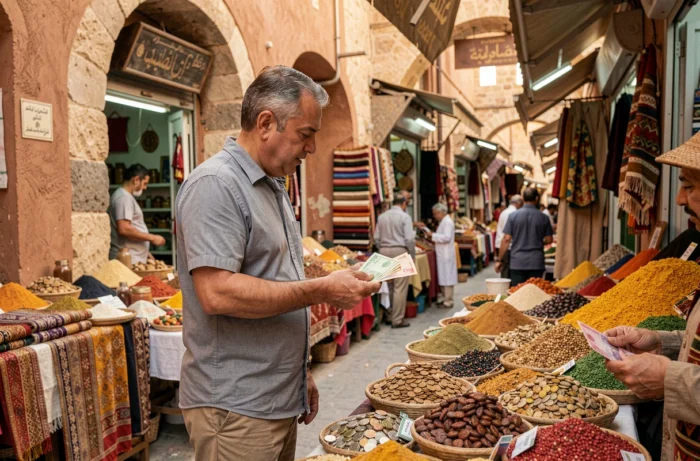
Egyptian Pound, Euro, or Dollar: What Exchange Rate to Expect
The Egyptian pound experienced fluctuations in March 2024, leading to a significant depreciation against the dollar and euro. This context has a direct effect on the purchasing power of European travelers: local prices in EGP have become significantly more accessible once converted from the euro.
Exchange offices on-site generally offer a better rate than those at European airports. Departing with cash euros and gradually converting them in Cairo or Luxor remains the most advantageous strategy. Exchanging in Egypt is cheaper than in Europe in the vast majority of cases.
Euros or Dollars for On-Site Exchange
Both currencies are accepted at exchange offices and Egyptian banks. Hotels, guides, and tourist service providers often accept direct payment in euros or dollars. However, for everyday expenses (taxis, cafes, markets, tips), the Egyptian pound remains the only realistic option.
- Hotels and organized excursions: payment in euros or dollars frequently accepted, sometimes at a less favorable rate than banks
- Tourist restaurants in Cairo or Luxor: card payment often possible, but having some cash in pounds is still useful
- Markets, taxis, small shops: only Egyptian pounds are accepted
- Tips (bakshish): always in pounds, in small denominations
Bank Cards and ATM Withdrawals in Egypt
Visa and Mastercard work in most hotels, upscale restaurants, and shops in tourist areas. ATMs are widespread in major cities and major tourist sites.
Withdrawal fees vary significantly depending on French banks. Some charge a percentage on the amount withdrawn, others a fixed fee per transaction, and almost all apply a currency conversion commission. Checking your card’s terms before departure can help avoid unpleasant surprises.
Contactless Payment and Mobile Wallets
The Central Bank of Egypt announced a card tokenization system aimed at integrating mobile wallets like Apple Pay, Google Pay, and Samsung Pay. The rollout was planned for the first quarter of 2025, and Google Wallet was set to launch in Egypt in January 2025.
In practice, contactless payment remains limited to newer brands and international hotels. Small businesses and local providers do not yet have compatible terminals. Relying on contactless as the primary payment method would be premature.
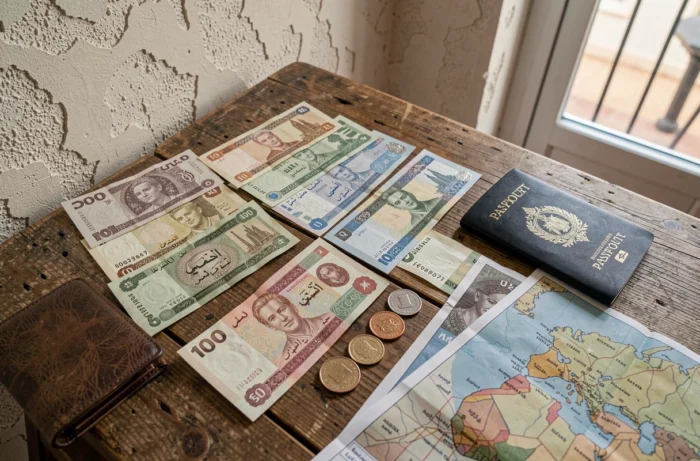
Electronic Payment at Egyptian Tourist Sites
The electronic ticketing system is gradually expanding to archaeological sites and museums. This development allows entry payments by card in some of the most visited places in the country, reducing the need to carry large amounts of cash.
This trend does not yet cover the entire territory. Secondary sites, small regional museums, and guards offering access to less frequented areas still operate exclusively in cash. Planning a mix of cash and card remains the most reliable strategy.
Tip Budget: An Item Not to Underestimate
Tips are part of Egyptian economic culture. Tipping is expected in almost all service interactions: porters, drivers, servers, guides at sites, restroom attendants.
- Plan to have a reserve of small denominations in Egyptian pounds from day one
- Tips in euros or dollars are sometimes accepted in hotels, but local currency is always preferred
- Splitting withdrawals to have low-value bills facilitates daily transactions
The ratio of card spending to cash spending clearly leans towards cash as soon as you leave hotel circuits. The export limit of 5,000 EGP encourages calibrating withdrawals as closely as possible, while the growth of electronic payment at major sites gradually reduces the need for cash. Adjusting your cash/card distribution according to the planned itinerary, day by day, remains the most effective method for managing your budget in Egypt.