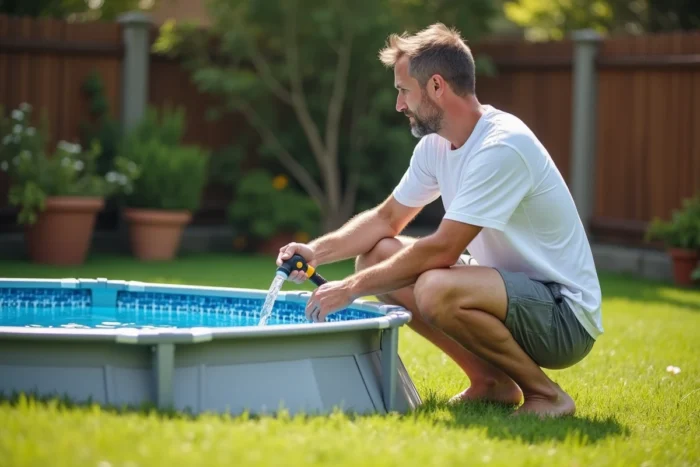
You have just set up your above-ground pool in the garden, the hose is ready, and the temptation to fill it all at once is strong. The problem is that a poorly conducted filling can deform the structure, skew the water level, and complicate chemical treatment for weeks. Before turning on the tap, a few simple guidelines can make all the difference.
Pressure on the structure: why the filling rate matters as much as the volume
Imagine a plastic bag that you fill too quickly under the tap. It deforms, pulls to one side, and eventually gives way at a junction point. An above-ground pool made of fabric or steel reacts in the same way, on a larger scale.
A slow filling protects the structure in stages. Fill it up by about ten centimeters, check that the pool is not leaning, then continue. Starting early in the day allows you to monitor the alignment at each stage, even if you have to turn off the water at night and resume the next day.
On even slightly sloped ground, the water pushes harder on the lower side. A difference of just a few centimeters on the ground is enough to create lateral stress that, once the pool is full, can deform the posts or tear a fitting. Check the flatness before starting, not after.
To delve deeper into the ideal timing and water filling protocol, you can refer to this guide that explains when to fill your above-ground pool with Youpi La Maison and details each step.
Ideal water level for above-ground pools: the skimmer reference
You may have noticed that the skimmer (that rectangular opening on the wall) has a flapper? This flapper only works properly if the water reaches a specific point.
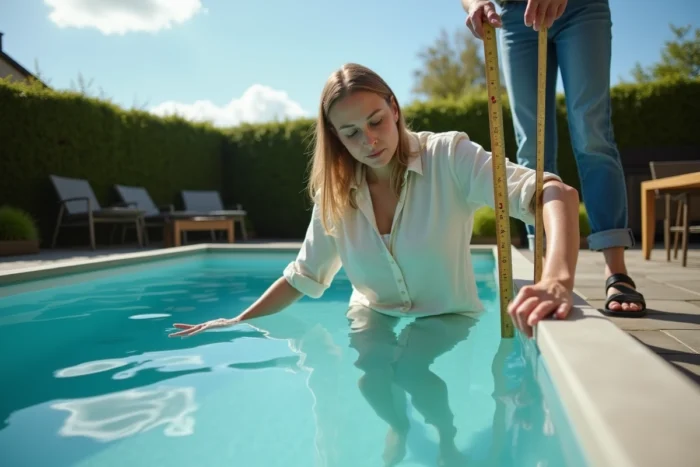
The correct level is between half and two-thirds of the skimmer. If it’s too low, the pump sucks in air and may lose its prime. If it’s too high, the flapper no longer pivots, and floating debris is no longer captured at the surface.
Concrete consequences of an improperly set level
- Level too low: the pump runs dry intermittently, which accelerates wear and reduces filtration efficiency. Water stagnates on the surface, and algae establish themselves faster.
- Level too high: the skimmer no longer creates suction on leaves and insects. You end up scooping everything out with a net, which negates the purpose of the filtration system.
- Fluctuating level (evaporation, splashes, rain): check the skimmer reference at least once a week and adjust with a simple addition from the garden hose.
A waterproof marker line on the wall, at the height of two-thirds of the skimmer, provides a permanent visual reference. This avoids estimating by eye at each check.
Water restrictions and pool filling: what the regulations really impose
Water filling guides often talk about drought “in general.” The regulatory reality is more stringent. At alert level, filling a pool is generally prohibited, not just discouraged. At vigilance level, it is usually allowed, but with an explicit call for water conservation.
Before connecting the hose, check your department’s map on the Propluvia website of the Ministry of Ecological Transition. The alert level can change from week to week, and a fine for filling during a prohibition period can reach a significant amount.
Preserve water rather than drain
When restrictions are announced, the right strategy is to conserve existing water rather than draining to start over. Covering the pool with a tarp limits evaporation. Detecting a leak early (abnormal drop in level over 24 hours, pump turned off) prevents losing hundreds of liters without realizing it.
Filling your above-ground pool in spring, before the summer restriction periods, remains the best way to enjoy the pool all summer without risking a prefectural order in the middle of July.
Filtration and water treatment from the start: costly mistakes
Many owners fill first, then think about chemical treatment later. The classic result: green water in three days and a shock chlorine treatment that costs twice as much as a preventive treatment.
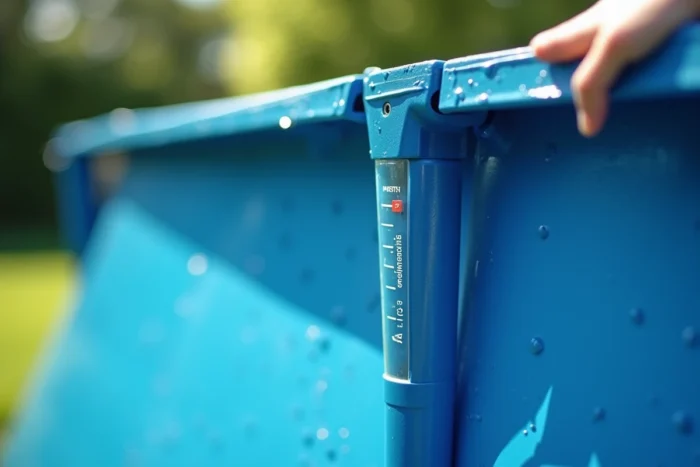
Activate filtration as soon as the water reaches the skimmer level. There is no reason to wait until the pool is full. Circulating the water during filling avoids dead zones and allows the filter to start capturing fine particles present in the tap water.
TAC, pH, chlorine: in what order to act
Tap water has its own chemical balance, which almost never matches the ideal values for a pool. Here’s the logical order:
- First, measure the TAC (total alkalinity). It is the buffer that stabilizes the pH. Adjusting the pH without knowing the TAC is like building on sand.
- Next, adjust the pH to keep it within the range recommended by your treatment system manufacturer (chlorine, bromine, or other).
- Perform an initial shock treatment once the pool is filled and the parameters are stabilized. This shock disinfects the new water and destroys microorganisms introduced during filling.
Test the water with strips or a drop kit before and after each adjustment. Two measurements spaced a few hours apart are better than one, because the products take time to dissolve and distribute evenly.
When to fill your above-ground pool: the schedule that simplifies everything
Spring remains the most comfortable window. The outside temperature is still moderate, which slows algae proliferation and allows time to detect any structural or filtration issues before the heat sets in.
Filling in the middle of summer exposes you to two simultaneous risks: potentially active water restrictions and a rapid increase in microorganisms in untreated water under the sun. Filling early provides a margin to correct parameters without urgency.
For pools that remain set up for winter with a reduced water level, a simple top-up with the hose is sufficient in spring. Check the liner’s condition, clean the waterline, then raise the level to the skimmer reference before restarting filtration.
Filling an above-ground pool is not complicated once you respect three guidelines: a moderate flow rate to preserve the structure, a level set on the skimmer for the filtration to work, and a chemical treatment initiated as soon as the first centimeters of water are in. The rest is just a bit of patience and an eye on the regulatory weather.