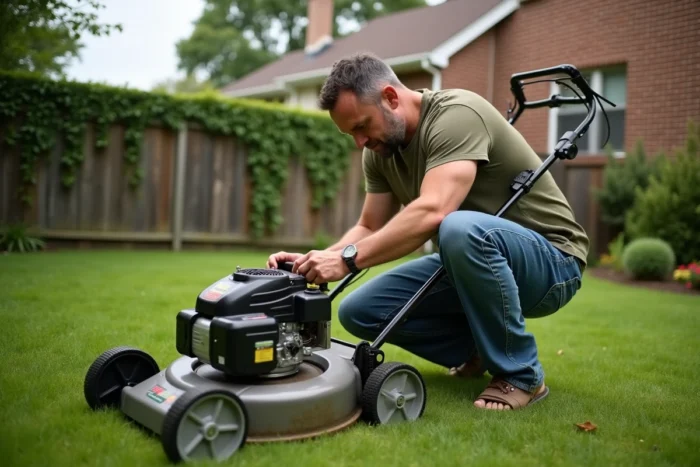
On a a sloped lawn with grass up to mid-calf, a 140 cc mower stalls every two minutes. We push, we restart, we waste a lot of time. The natural reflex would be to buy a model with a larger engine displacement, but this reasoning simplifies a problem that is not. Engine displacement and actual power do not tell the same story, and confusing the two often leads to a bad purchase.
Why engine displacement alone does not predict the power of a gas mower
Everywhere you read tables correlating cc/hp, with fixed ratios like “for X cc, count on Y hp”. These grids have no reliable technical value. Two engines of the same displacement can show very different power depending on their architecture, operating speed, type of intake, and exhaust quality.
Engine displacement measures the total volume swept by the engine’s pistons. It is a geometric data point, not a performance indicator. Power, expressed in horsepower (hp) or kilowatts (kW), depends on how the engine utilizes this volume: compression, timing of the distribution, quality of combustion.
A well-designed Briggs & Stratton engine of 190 cc can be as effective in cutting as a generic 200 cc block with mediocre efficiency. To delve deeper into the cc to hp conversion for mowers, it is better to look at the complete technical sheet rather than a single number.
Serious manufacturers also display engine displacement and power separately. When a product sheet only mentions displacement without providing power in hp or kW, it is often a signal: the manufacturer prefers to highlight a large cc number rather than a modest actual power.
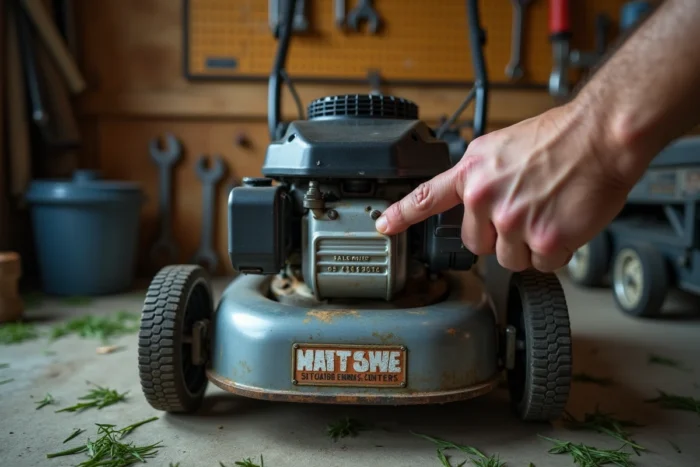
Gas mower: reading a technical sheet without making mistakes
Rather than looking for a magic conversion formula, it is in our best interest to compare complete technical sheets. Here are the data points that really matter when choosing:
- The net power in kW or hp, measured at the crankshaft according to the manufacturer’s standard. This is the only reliable indicator of what the engine actually delivers to the blade.
- The maximum torque and the speed at which it is reached. An engine that delivers its torque at low speed handles tall, wet grass better than a high-revving engine without force.
- The cutting width, which determines the area treated per pass. A powerful engine associated with a cutting width that is too narrow does not save time.
- The propulsion mode: a self-propelled mower consumes part of the engine power to move forward. On a sloped terrain, this loss is significant.
One point that is often overlooked: the weight of the machine. A heavy mower with just enough engine power tires you out more than a lightweight model with a few cc less. Maneuverability on the ground is part of the perceived power.
Engine displacement and type of terrain: some concrete benchmarks
For a flat and regularly mowed lawn, a low-displacement engine is more than sufficient. Things get complicated with dense grass, slopes, or uneven ground.
On rough terrain, we need higher torque, not just a bigger engine. This is where the distinction between cc and hp makes all the difference: a moderately sized but well-optimized engine will handle the load better than a big, sluggish block.
Feedback varies on this point, but in practice, self-propelled models with a medium displacement engine remain the best compromise for average-sized gardens with relief.
Engine maintenance: the factor that power guides overlook
We spend hours comparing cc and horsepower on product sheets, while maintenance affects actual power much more than the original displacement. A neglected engine loses a significant portion of its performance in just a few seasons.
A clogged air filter reduces intake and decreases efficiency. A worn spark plug degrades combustion. A dull blade forces the engine to run faster for a mediocre cutting result. A deck full of grass residue creates unwanted friction.
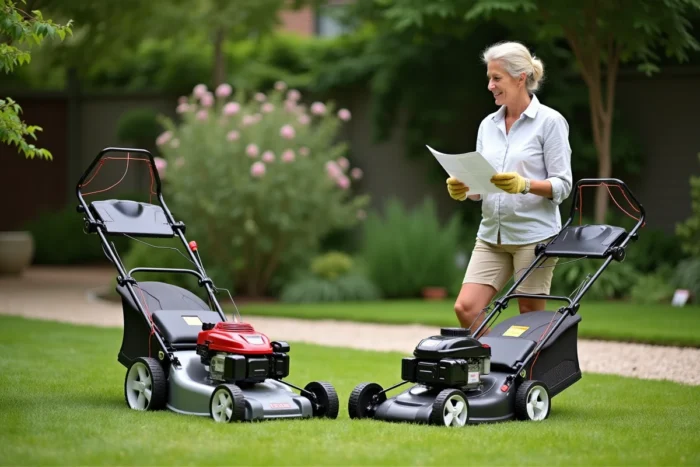
The basic operations not to miss:
- Changing the engine oil according to the frequency indicated by the manufacturer (often after the first hours of use, then at regular intervals).
- Cleaning or replacing the air filter before each mowing season.
- Sharpening the blade at least once per season, more often if the terrain has stones or earthy areas.
- Cleaning the underside of the deck after each use in wet conditions.
A mower with modest displacement but perfectly maintained retains its cutting power year after year. In contrast, a theoretically more powerful model left without maintenance will become cumbersome to use by the second season.
Engine power and cutting width: the real criteria for choosing your mower
The classic trap is to reason solely in terms of raw power. In practice, it is the torque power-cutting width that determines efficiency on the ground.
A powerful engine combined with a generous cutting width allows for quick coverage of a large area. Conversely, a muscular engine on a small cutting width wastes energy without productivity gains. For a medium-sized garden, a cutting width suitable for the size of the terrain is as important as the horsepower displayed.
Discharge, mulching, and bag: power at the service of cutting
The type of grass discharge directly affects the demand on the engine. Mulching, which finely shreds the grass to redeposit it on the ground, requires more power than simple side discharge. If you opt for a collection bag, the engine must also propel the cut grass into the collector.
Choosing a mulching model with an engine that is just adequate leads to frequent clogs and uneven cutting. This is a concrete case where a few extra horsepower makes a real difference in daily use, much more than in a classic rear discharge mowing.
Ultimately, converting cc to horsepower only makes sense if we look at the entire technical sheet and the actual use we make of our mower. Useful power depends on the engine, its maintenance, and the chosen cutting configuration, not on a simple mathematical ratio between displacement and horsepower.