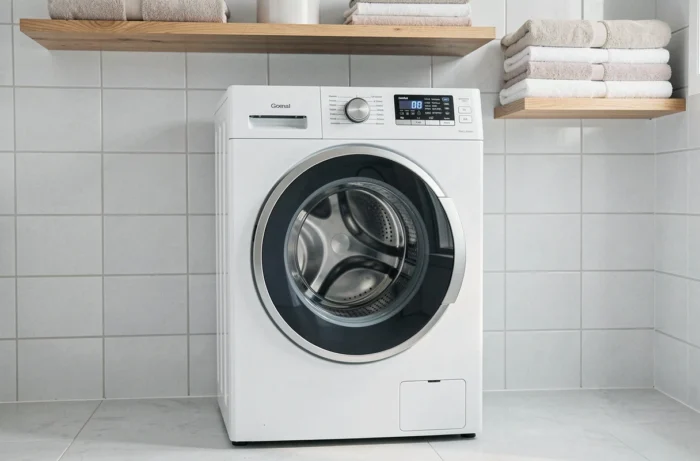
The 6th Sense technology integrated into Whirlpool 9 kg washing machines relies on a set of sensors that automatically adjust the cycle duration, water quantity, and temperature based on the load detected in the drum. Understanding how these sensors work and the logic of the programs allows you to truly harness the capabilities of the appliance, beyond just the simple choice between “cotton” and “synthetics.”
6th Sense Sensors: How the Machine Adapts Each Cycle
The control panel of the FFB9489BV models displays default settings (temperature, spin speed) that change according to the selected program. What the manual explains less clearly is the exact role of the sensors in this adaptation.
Two types of measurements continuously intervene during the cycle. A load sensor evaluates the weight of the laundry during the initial washing phase. A temperature sensor checks that the water reaches the chosen setpoint and adjusts the heating duration.
In practice, this means that a half-drum of lightweight cotton will not consume the same amount of water as a full load of bath towels, even on the same program. The duration displayed on the screen at the start is just an estimate: it can vary by several minutes during the cycle, which is normal and not a malfunction.
To better understand the interactions between these sensors and each program, the complete manual for the Whirlpool 6th Sense 9kg washing machine details the settings that allow for optimizing water and energy consumption on a daily basis.
Eco 40-60 Program on Whirlpool 9 kg: The Key to Real Consumption
The Eco 40-60 program is not just a simple “economical” slow mode. On the FFB9489BV models, rated in energy class A, this program serves as the reference cycle on which energy performance is measured and optimized.
The electricity consumption for this cycle is at the lower end of current 9 kg washing machines. Consistently using the Eco 40-60 program for everyday laundry (cotton and lightly soiled blends) results in a significant difference on the annual bill compared to quick or intensive cycles.
Why Quick Cycles Consume More
A quick cycle compensates for its reduced duration with a more abrupt temperature rise and a larger volume of water to achieve an acceptable washing result in less time. The quick program can consume more energy than an Eco cycle that is twice as long.
The reflex to use the quick mode “to save” is therefore counterproductive in terms of energy. The Eco 40-60 program remains the most efficient choice for any load that does not present stubborn stains.
Actual Drum Capacity 9 kg: What Maximum Load Means
The 9 kg advertised corresponds to a maximum load of dry cotton on the Eco 40-60 program, with the drum filled without packing. This nominal capacity drops as soon as you change the type of fabric or program.
- For synthetics, the recommended capacity generally drops to half of the cotton load, as these fibers need more space to be properly agitated and avoid wrinkling.
- For wool or delicate fabrics, the usable load is further reduced, often to one or two kilos maximum, to limit mechanical friction in the drum.
- Duvets and bulky items occupy a large volume for a low weight: a visually full drum may weigh only three or four kilos, which is normal and does not justify adding more laundry.
Overloading the drum beyond these thresholds does not trigger an alarm on most 6th Sense models. The sensors adjust the cycle, but the washing result deteriorates: the laundry no longer circulates freely, the detergent is poorly distributed, and rinsing becomes insufficient.
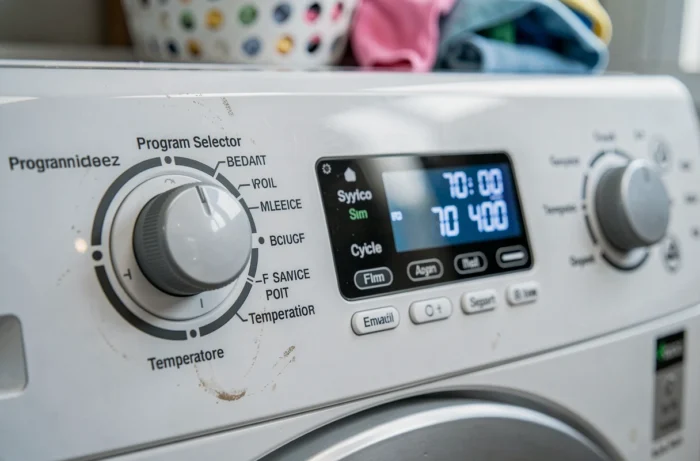
Maintenance of the Pump Filter and Detergent Drawer of Whirlpool
Two maintenance operations directly condition the longevity of the washing machine and the quality of washing. The manual mentions them, but without emphasizing their frequency or the consequences of forgetting them.
Drain Pump Filter
The filter located at the bottom of the front retains foreign bodies (coins, fibers, small objects) before the drain pump. A clogged filter causes incomplete drainings and can trigger an F03/FP error code indicating a drainage problem.
To clean it, open the hatch, place a flat container underneath to collect residual water, then unscrew the filter. Remove any debris by hand and rinse under running water. This operation, performed once a month, is sufficient to prevent most drainage blockages.
Detergent Drawer
The detergent drawer is removable on the FFB9489BV models. Residues of liquid detergent or powder accumulate in the compartments and in the supply duct, creating a favorable environment for mold and unpleasant odors.
- Remove the drawer by pressing the central latch and rinse it thoroughly under warm water.
- Clean the drawer housing with an old toothbrush to reach the corners where dried detergent forms deposits.
- Run a high-temperature cycle (hot cotton program) empty once a month to dislodge residues in the drum and internal pipes.
FreshCare+ Function and Delayed Start: Two Underutilized Options
The FreshCare+ function prevents wrinkles and odors from damp laundry that stagnates at the end of the cycle. On equipped models, it automatically activates to preserve the freshness of the laundry if the drum is not emptied immediately.
The delayed start allows you to schedule the cycle launch up to 24 hours in advance. Combined with an electricity subscription with peak/off-peak pricing, the delayed start during off-peak hours reduces the cost of each cycle with no extra effort. Just load the machine, add the detergent, select the Eco 40-60 program, and then set the delay so that the cycle finishes in the morning.
These two functions, often overlooked because they are not visible on the main selector, are among the dedicated buttons on the control panel. They transform a basic use of the machine into a truly optimized routine, both in terms of energy and the final result of the laundry.